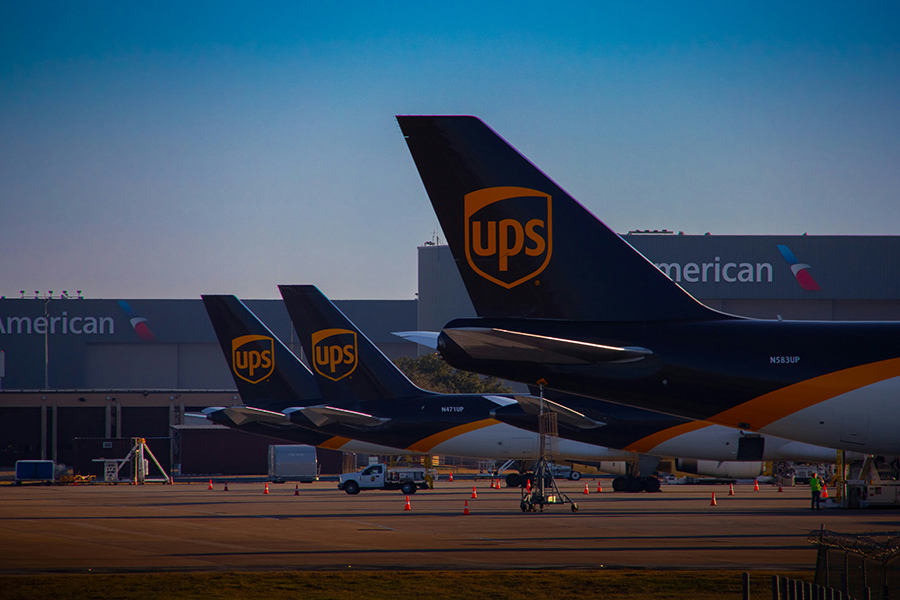
FedEx and UPS have started returning tariff money to customers after the U.S. Supreme Court struck down a sweeping set of import tariffs. FedEx has received about $800 million in refunds and began sending money to customers around August 10, 2026. UPS has applied for a little under $500 million covering roughly 2.5 million entries, with payments following 60 to 90 days after it receives funds from the government. DHL says it is passing along refunds as it receives them.
Why Is This Happening?
On February 20, 2026, the U.S. Supreme Court ruled 6-3 that the International Emergency Economic Powers Act (IEEPA) does not give the president authority to impose tariffs. The government had used IEEPA to justify sweeping “reciprocal” and “fentanyl” tariffs imposed on imports throughout 2025.
Following the ruling, a federal judge ordered U.S. Customs and Border Protection (CBP) to refund the unlawfully collected duties. CBP estimates roughly $166 billion in IEEPA tariffs were collected from more than 330,000 importers across 53 million customs entries. As of the end of July 2026, according to a court filing, approximately $100 billion had been sent to the U.S. Treasury for disbursement, about 60% of the total owed.
CBP is processing refunds in phases. Phase 1 covers entries that had not yet been finalized (“liquidated”) or that were liquidated within the prior 80 days. Later phases will cover additional entries as they become eligible.
Who Actually Gets This Money?
Refunds go to whoever is listed as the Importer of Record (IOR), the party that paid the tariff to CBP. That is often a shipping carrier like FedEx or UPS acting on a customer’s behalf, a retailer, or a business that imports goods directly.
If you personally paid a separate customs or duty charge on a package (common with international purchases shipped via FedEx, UPS, or DHL), you may be owed a refund directly. If you simply paid a higher price at a U.S. store because a retailer passed along tariff costs, you are not automatically entitled to a refund. Retailers received refunds on the tariffs they paid, but nothing requires them to lower prices or return money to shoppers.
Several consumers have also filed lawsuits over IEEPA tariffs, though not all target the same thing. Some lawsuits accuse retailers of keeping tariff refunds instead of passing savings back to shoppers. Separately, FedEx disclosed in a 2026 financial filing that it faces fourteen nationwide class-action lawsuits from customers seeking IEEPA tariff refunds directly from the company.
How to Check for a FedEx Refund
FedEx built a self-service portal where customers can check whether the company has received a refund tied to their shipment.
- No application is required
- Enter your shipment or tracking information into the FedEx IEEPA Tariff Refund Portal
- If a refund has been received, you can securely submit payment and tax information to receive your money
- FedEx says it will not charge a fee for this service
That $800 million figure comes from a May 2026 financial filing, out of $3.3 billion in claims FedEx has submitted to CBP so far. The company has said it plans to pass along refunds to the customers who originally paid the charges.
How to Check for a UPS Refund
UPS created an IEEPA Tariff Refund Lookup Tool for customers to check shipment eligibility.
- Enter a tracking number or shipping address at the UPS IEEPA refund lookup page
- If UPS was the Importer of Record on your shipment, no action is needed. UPS issues these refunds automatically
- UPS applies refunds to any past-due invoices first, then disburses any remaining balance
- Remaining funds are typically sent 60 to 90 days after UPS itself receives the money from CBP
That $500 million is a first phase; UPS has said it paid roughly $5 billion in tariffs on customers’ behalf overall, so more refunds are likely as later phases open up.
What About DHL?
DHL has said it filed refund claims for nearly all eligible shipments where it served as Importer of Record. The company has not published a specific dollar figure for its expected refunds.
Is This Refund Guaranteed?
Not entirely. The federal government has appealed the refund order to the U.S. Court of Appeals for the Federal Circuit. If that appeal succeeds, some or all of the refund process could be delayed or altered. As of this writing, CBP continues to process and issue refunds while the appeal is pending.
UPS says only the tariff itself is refundable, not the administrative or brokerage fees charged on the original shipment. FedEx and DHL have not published equivalent fee policies.
What If I Was the Importer of Record Myself?
If you or your business is listed as the Importer of Record (common for businesses that import goods directly rather than through a carrier), you must request your refund directly from CBP rather than through FedEx or UPS. Details are available on the CBP IEEPA Duty Refunds page.
About This Page
RecallRefunds.com is a consumer information site. We are not FedEx, UPS, DHL, CBP, or a government agency, and we cannot check your refund status or process a claim on your behalf. This article summarizes publicly available information from CBP, FedEx, UPS, and court filings, and is general information rather than legal or tax advice. Refund amounts, timelines, and eligibility rules can change as CBP’s phased process continues and as the government’s appeal proceeds.