What Was Recalled?
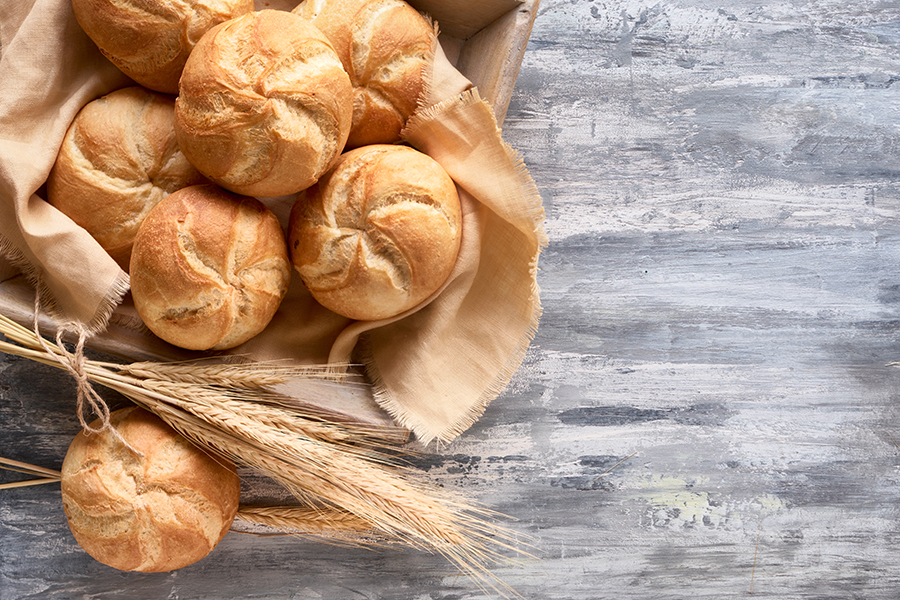
General Mills voluntarily recalled two Pillsbury frozen bread roll dough products after determining they may contain pieces of glass. The dough was not sold to shoppers in its original packaging — it was shipped in bulk cases to Walmart in-store bakeries, where employees thawed, proofed, and baked it before selling the finished rolls from the bakery case.
The company started the recall on June 19, 2026. The FDA later classified it as a Class II recall on July 13, 2026, and published it in the agency’s weekly enforcement report. Together, the two enforcement entries cover roughly 735,840 rolls across 4,340 cases.
Because the rolls reached customers as loose bakery items rather than sealed retail packages, this recall is unusual: most affected shoppers have no label, lot code, or UPC to check.
Which Products Are Affected?
Two products manufactured by General Mills and distributed by General Mills Sales, Inc. are covered.
Pillsbury Bread Rolls — Hard Roll Dough
| Detail | Information |
|---|---|
| Cases recalled | 3,080 |
| Units per case | 180 rolls, 2.25 oz each |
| Case net weight | 25.31 lb |
| Package UPC | 721582-13283 4 |
| Case UPC | 107-21582-13283-1 |
| Lot codes | 11JUN6JL and 12JUN6JL |
| “Better if Used By” dates | October 12, 2026 (lot 11JUN6JL) and October 13, 2026 (lot 12JUN6JL) |
| Total rolls | Approximately 554,400 |
Pillsbury Bread Rolls — Kaiser Roll Dough
| Detail | Information |
|---|---|
| Cases recalled | 1,260 |
| Units per case | 144 rolls, 2.5 oz each |
| Case net weight | 22.5 lb |
| Package UPC | 7 21582-13288 9 |
| Case UPC | 107-21582-13288-6 |
| Lot code | 12JUN6JL |
| “Better if Used By” date | October 13, 2026 |
| Total rolls | Approximately 181,440 |
No other Pillsbury dough products, refrigerated dough varieties, or retail-packaged rolls are included in this recall.
Why Was It Recalled?
The FDA lists the reason for both entries as potential foreign material — specifically glass. General Mills identified the problem internally and pulled the product before the FDA formally classified the recall, which is why the June 19 recall date precedes the July 13 classification date.
Neither General Mills nor the FDA has publicly identified the source of the glass or the production line involved.
Swallowing glass fragments can cause cuts to the mouth, throat, or esophagus, damage to teeth, or injury to the digestive tract. The FDA’s Class II designation means the agency concluded that exposure to the product may cause temporary or medically reversible health consequences, and that the probability of serious harm is remote. Class II sits below Class I, which is reserved for situations with a reasonable probability of serious injury or death.
No illnesses or injuries have been reported in connection with this recall.
What Should Consumers Do?
The recalled dough was pulled in mid-June, and General Mills has said the affected product has been removed from the supply chain. Any rolls a shopper still has at home from that period would be well past their freshness window. Still, if you have bakery rolls purchased from a Walmart in-store bakery in June 2026 and you are unsure about them:
- Do not eat them. Foreign-material recalls are not resolved by cooking, reheating, or inspecting the product visually — small glass fragments are easy to miss.
- Throw them out, or return them to the Walmart store where they were purchased.
- Contact the store where you bought them if you want confirmation about whether that bakery received affected dough.
- Call General Mills Consumer Relations at 1-800-230-8103 with questions about the recall.
- Seek medical attention if you believe you or a family member swallowed glass, or if you experienced mouth, throat, or abdominal pain after eating a bakery roll during this period.
For bakeries, delis, restaurants, and other food-service operators: if you received Hard Roll or Kaiser Roll dough matching the lot codes above, stop using it immediately, segregate the remaining cases, and contact your General Mills or Pillsbury distributor representative for disposition instructions.
Refund, Replacement or Repair Information
General Mills has not announced a formal consumer refund or replacement program tied to this specific recall. That is largely because the affected dough was a food-service product — the company’s direct customers were Walmart bakery operations, not individual shoppers.
Here is how to pursue a refund anyway:
If you bought baked rolls at a Walmart bakery: Walmart’s standard practice is to refund recalled food items, and its return policy generally does not require a receipt for a low-value grocery return, though having one helps. Bring the item or your receipt to the customer service desk and reference the General Mills recall. Because the rolls have no lot code, the store will typically make the call based on the purchase date.
If you no longer have the product or the receipt: Call General Mills Consumer Relations at 1-800-230-8103. In past recalls, the company has issued coupons or reimbursement to consumers who discarded affected products, though this is handled case by case and is not guaranteed here.
If you are a food-service operator: Work through your General Mills or Pillsbury distributor rep. Commercial credit for recalled inventory is normally processed through the distributor account rather than a consumer hotline.
There is no repair remedy for a food recall — the only outcomes are disposal, return, or credit.
Where Was It Sold?
General Mills stated that the two frozen dough products were baked onsite and sold exclusively at Walmart in-store bakeries in the United States.
The FDA enforcement reports list distribution across 19 states:
Arkansas, California, Florida, Georgia, Indiana, Louisiana, Maine, Missouri, New Mexico, New York, Ohio, Oklahoma, Pennsylvania, South Carolina, Tennessee, Texas, Virginia, Washington, and Wyoming.
The FDA listing itself does not name specific retailers or store locations; Walmart was identified by General Mills in its public statement. The recall does not cover Pillsbury products sold in sealed retail packaging on grocery shelves.
How to Identify the Recalled Product
This is the part that trips people up: most shoppers cannot identify the recalled product, because the identifying codes appear on the bulk dough cases used behind the bakery counter, not on the rolls sold to customers.
Bakery and food-service staff should check:
- The lot code printed on the case — look for 11JUN6JL or 12JUN6JL
- The “Better if Used By” date — October 12, 2026 or October 13, 2026
- The case UPC — 107-21582-13283-1 (Hard Roll) or 107-21582-13288-6 (Kaiser Roll)
- Case net weight of 25.31 lb (Hard Roll, 180 ct) or 22.5 lb (Kaiser Roll, 144 ct)
Shoppers should instead go by:
- Where you bought it — a Walmart in-store bakery, not the packaged bread aisle
- What you bought — hard rolls or kaiser rolls from the fresh bakery case
- When you bought it — roughly mid-to-late June 2026, before the product was pulled
If those three conditions match and you still have the rolls, treat them as potentially affected and discard them.
Official Recall Information
Agency: U.S. Food and Drug Administration (FDA) Recall type: Voluntary, firm-initiated Recall initiated: June 19, 2026 FDA classification: Class II, assigned July 13, 2026 Status: Ongoing (the FDA has not marked the recall terminated) Recalling firm: General Mills Sales, Inc. — Golden Valley, Minnesota Brand: Pillsbury Point of sale: Walmart in-store bakeries
Consumer contact: General Mills Consumer Relations — 1-800-230-8103
Official sources:
- FDA Enforcement Report database — accessdata.fda.gov/scripts/ires/
- FDA Recalls, Market Withdrawals & Safety Alerts — fda.gov/safety/recalls-market-withdrawals-safety-alerts
- General Mills — generalmills.com
Enforcement report entries are updated as the FDA verifies that recalled product has been recovered, and listings can be amended if additional lots or distribution states are identified. This page will be updated if the recall expands, the classification changes, or injury reports emerge.
RecallRefunds.com is a consumer information site. We are not a recall administrator, a law firm, a government agency, or a manufacturer, and we are not affiliated with General Mills, General Mills Sales, Inc., Pillsbury, or Walmart. This page summarizes a public food recall and is general information rather than legal or medical advice.